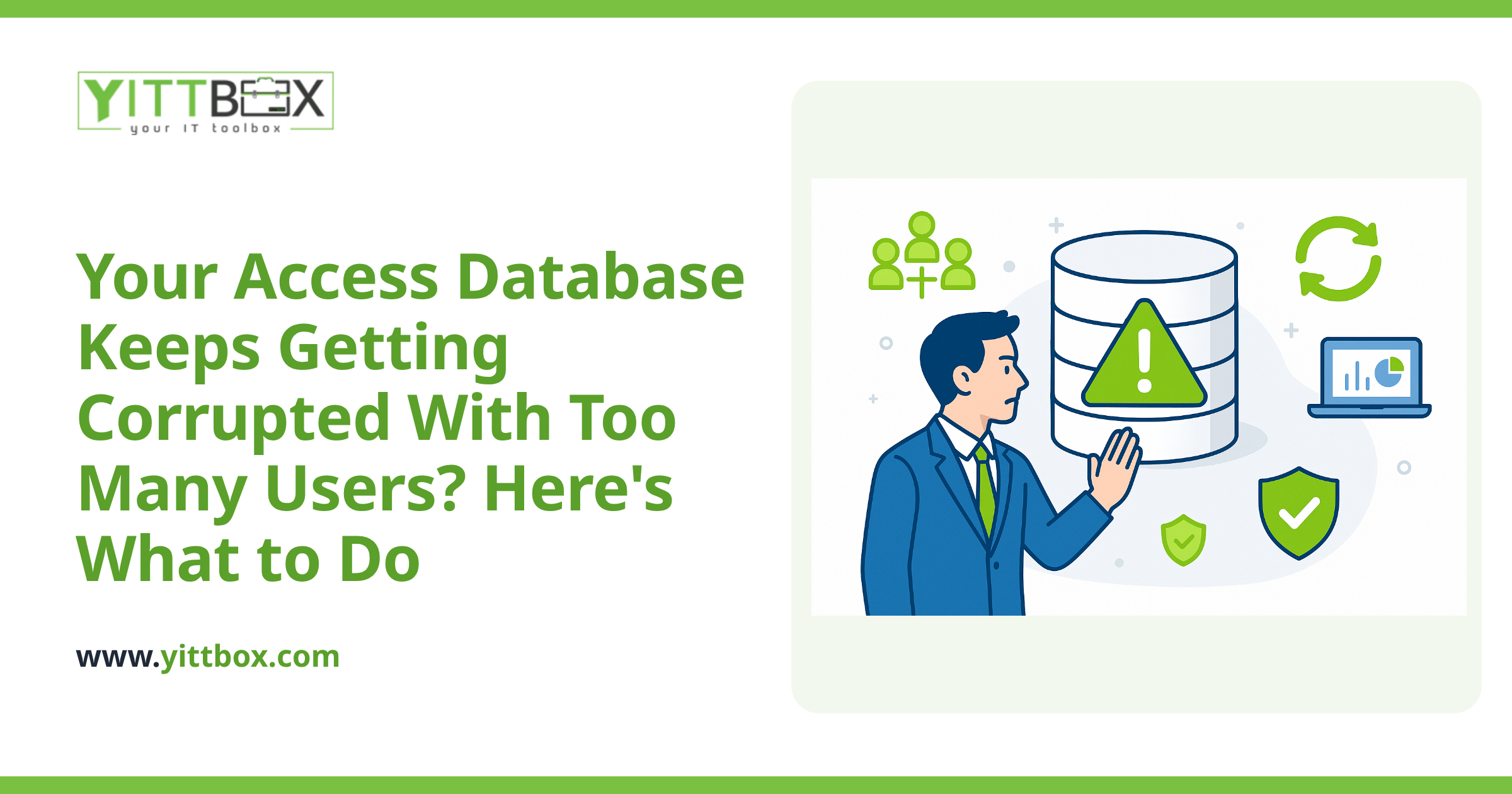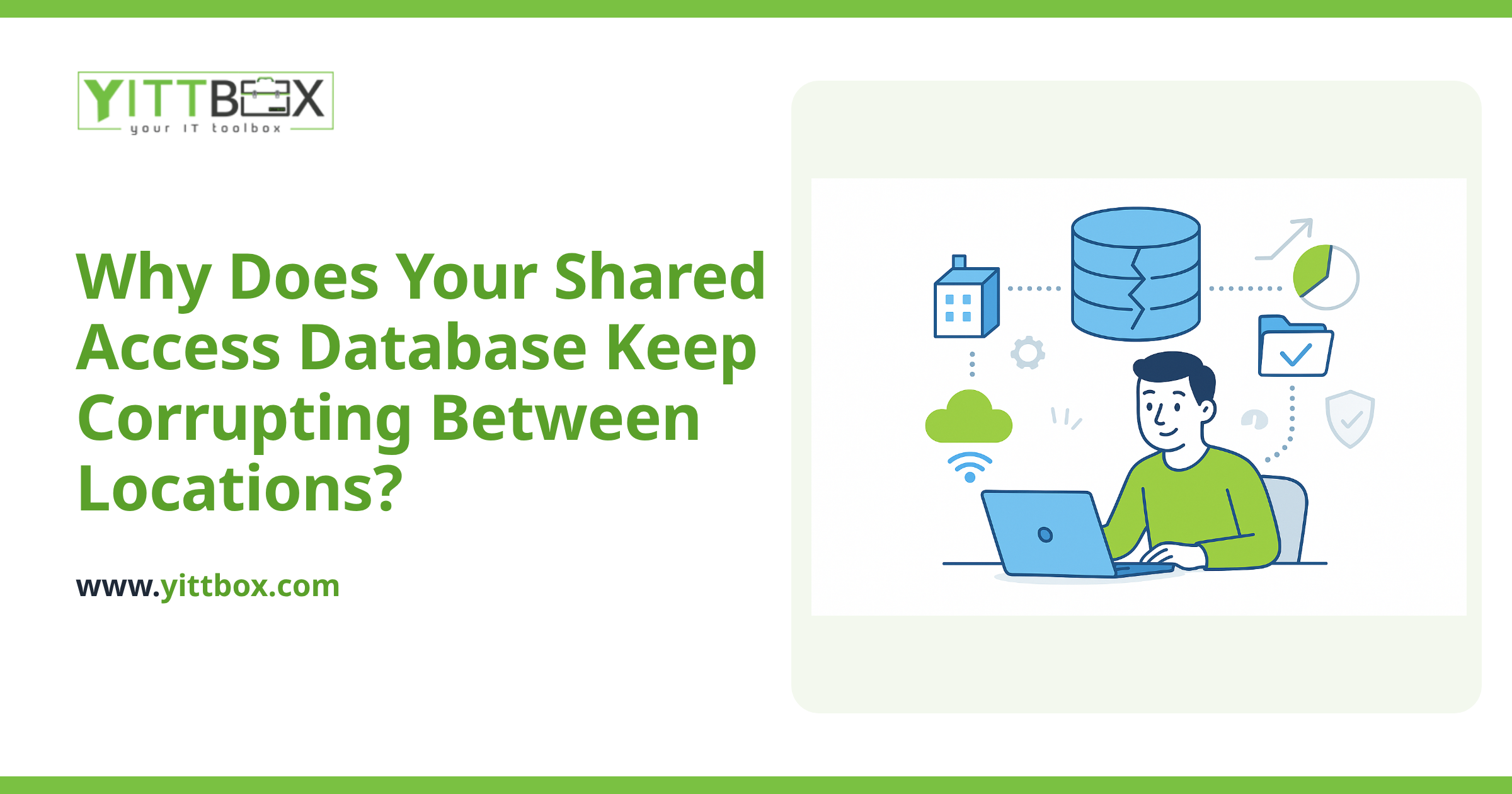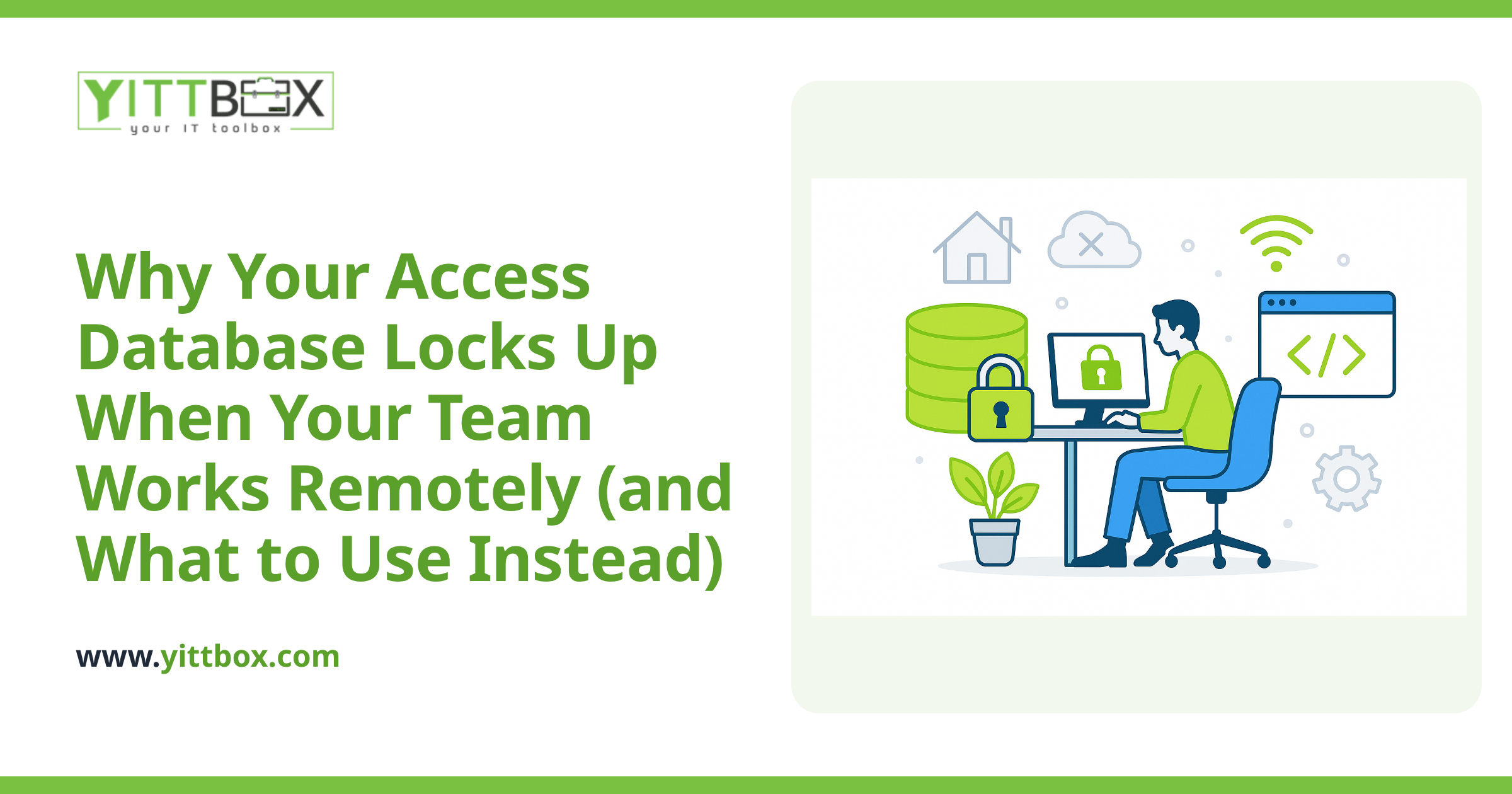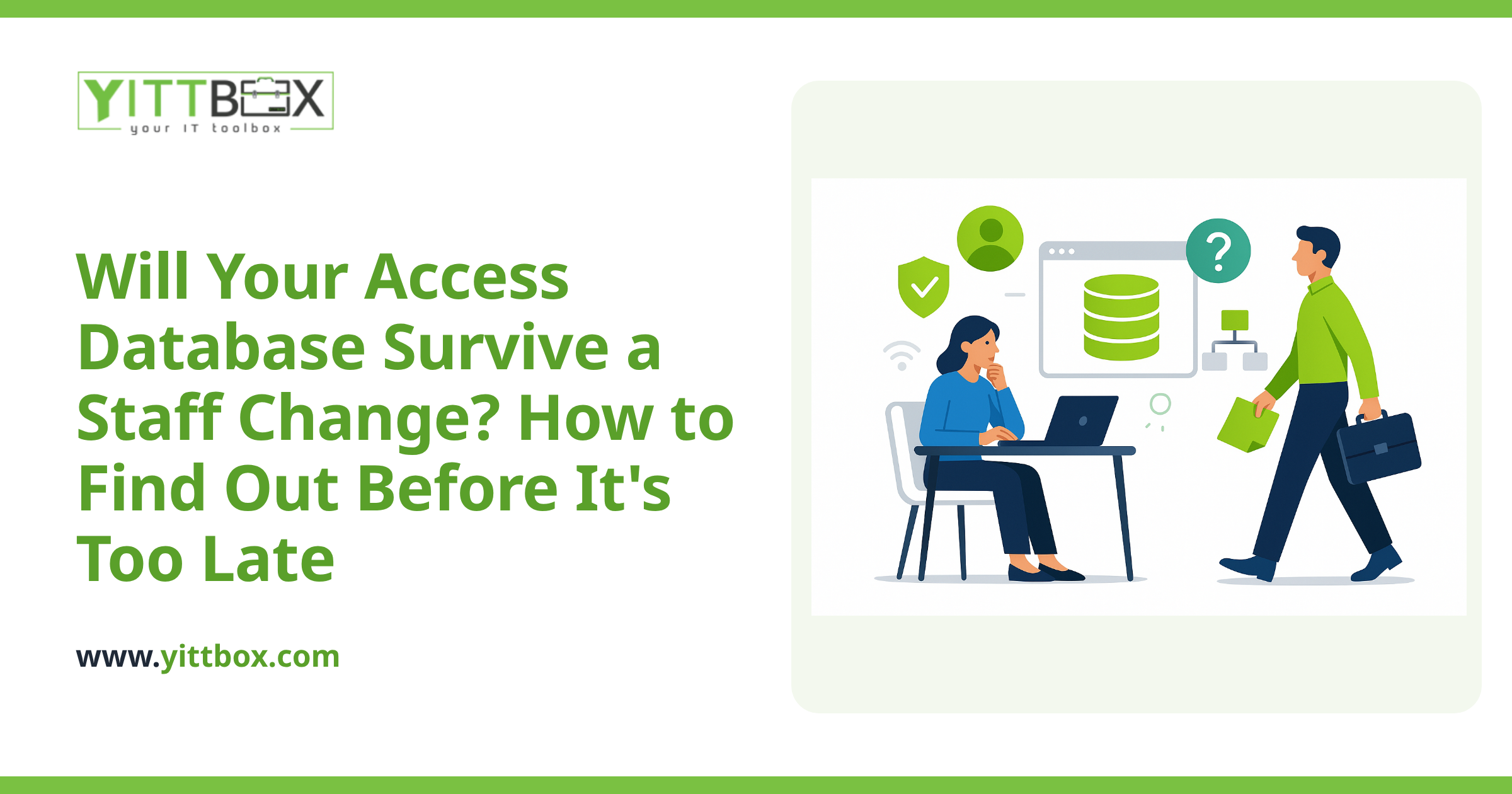

You built your business on an Access database, and for a long time it worked beautifully. But now two or three people are in it at once, and everything crawls. Forms take forever to load, reports time out, and every so often the whole thing locks up or throws an error that nobody understands. If you've started dreading the moment a second person opens the file, you're not alone — and the good news is this is a well-worn path with clear ways out.
Why does my Access database slow down when more than one person uses it?
Because Access was designed as a single-user, file-based system, not a shared multi-user platform. When several people open the same database over a network, every action has to travel back and forth across shared files, and Access has to constantly check who has locked which record. That overhead adds up fast.
Common culprits behind the slowdown include:
- The whole database sitting in one file — forms, reports, and data all bundled together, so everyone is fighting over the same file.
- A slow or busy network share — Access is very sensitive to network hiccups, and a flaky connection can freeze the app for everyone.
- Growing data — tables that were fast at 2,000 records behave very differently at 200,000.
- Record locking conflicts — two people trying to edit related data at the same time, with Access blocking one to protect the other.
Can I fix the slowness without replacing everything?
Sometimes, yes — at least enough to buy you breathing room. A few practical steps often help in the short term:
- Split the database into a "back end" (the tables/data) that lives on the server and a "front end" (forms and reports) that each person keeps a copy of on their own machine. This alone can dramatically cut the load.
- Compact and repair regularly — Access files bloat over time, and a bloated file is a slow file.
- Trim heavy queries and reports that pull far more data than anyone actually needs to see.
- Improve the network path — a wired connection to the server beats Wi-Fi for a shared Access file every time.
These fixes are worth doing. But be honest with yourself about what they are: patches. If your team keeps growing and your data keeps piling up, you'll eventually hit the ceiling of what Access can do, no matter how well you tune it.
How do I know when it's time to move off Access entirely?
A good rule of thumb: when the workarounds start costing you more time than the software saves you. Watch for these signals:
- You've told staff to "take turns" using the database because it can't handle everyone at once.
- You're afraid to let more than a couple of people in for fear of corruption or crashes.
- People need access from home, from the road, or from a phone — and Access simply can't go there.
- You're keeping shadow spreadsheets on the side because the database can't do what you need.
- Reports that should take seconds now take minutes, and it's getting worse.
When you reach that point, the answer usually isn't a bigger version of the same thing — it's a proper multi-user application built on a real database. That's the difference between patching a leak and fixing the plumbing. If you're weighing that decision, our page on converting an Access database into a modern web application walks through what the move actually involves.
What replaces an Access database once it outgrows itself?
Most small businesses in this spot move to a custom web application backed by a proper database (the kind built to handle many users at once without breaking a sweat). Instead of a file everyone shares, you get a system people log into from a browser — on any computer, and often on phones and tablets too.
The practical benefits usually look like this:
- Real multi-user support — ten or fifty people can work at the same time without slowdowns or corruption.
- Access from anywhere — the office, home, a job site — with proper logins and permissions.
- Room to grow — the system handles far more data without grinding to a halt.
- Keep what works — a good conversion carries over your existing data and rebuilds the forms and reports your team already relies on, so the switch feels familiar rather than jarring.
Will I lose all the data and logic I've built up over the years?
No. The years of data and business rules living in your Access database are an asset, not something to throw away. A careful migration moves your existing records into the new system and recreates the way you already work — the same forms, the same reports, the same logic — just on a foundation that can actually handle your team. The goal is for your staff to feel at home on day one, not to relearn everything from scratch.
Where should I start?
Start by getting an honest read on your situation before you spend a penny. There's no need to guess whether you should tune your current setup or move off it entirely — that's a question someone can look at with you.
We offer a free, no-pressure review of your Access database and how your team uses it. No pushy sales calls, no jargon — just a plain-English look at your options and a straight answer about what makes sense for a business your size. When you're ready, you can request a free estimate or read more about converting your Access database into a web application. Either way, you'll walk away knowing more than you did — with no obligation to do anything at all.
Comments
Be the first to comment on this post.