
Your Access database has probably been running your business for years. It tracks your customers, your orders, maybe your inventory — and most days, it just works. But lately you've noticed the cracks: only one person can be in it at a time, it crashes when the file gets too big, and nobody remembers how half of it was built. Before you spend a penny replacing it, you need to know exactly what you're dealing with.
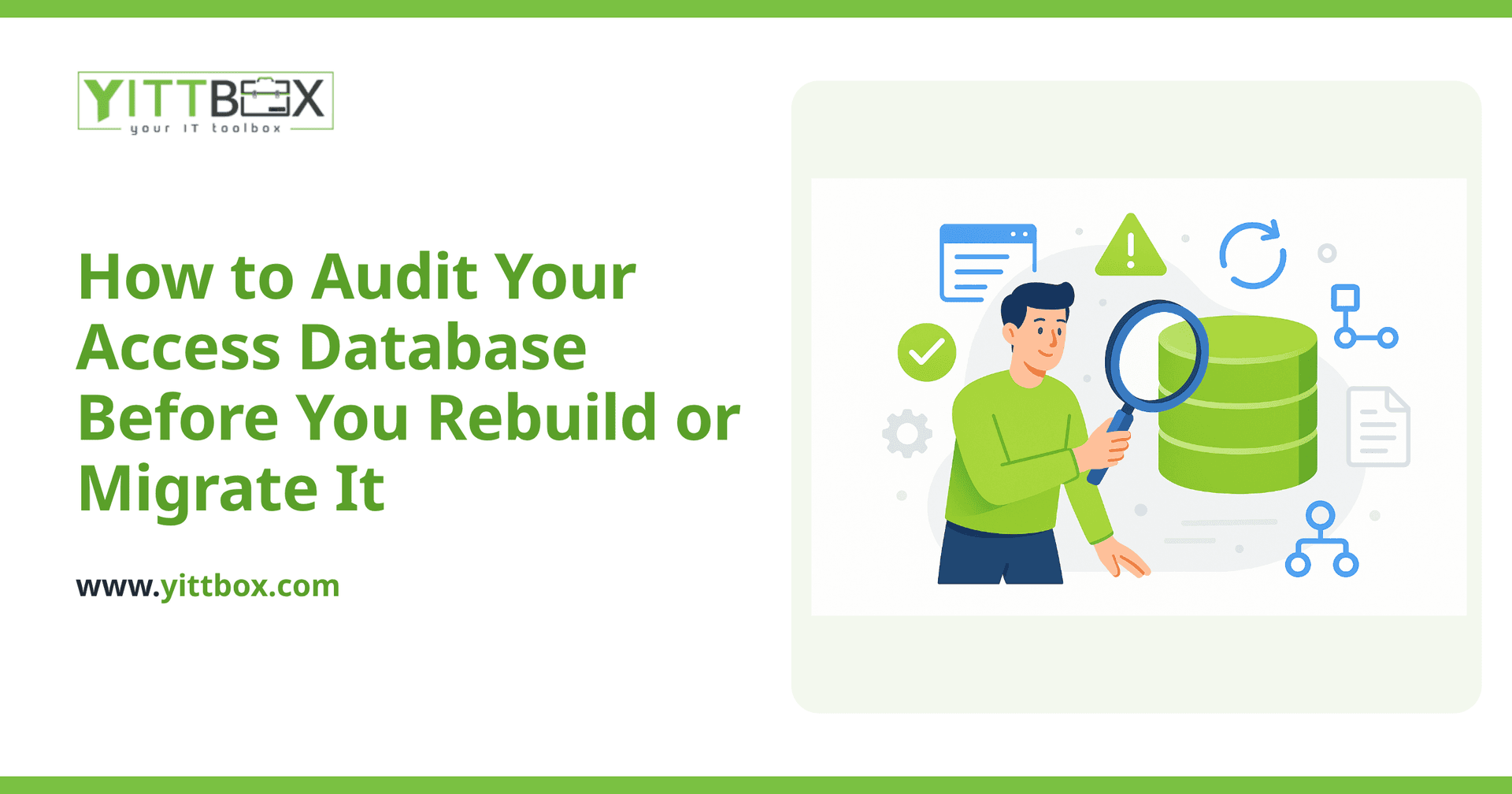
An honest audit tells you whether your database needs a light modernization, a full rebuild, or simply a migration to something more stable. Here's how to look under the hood — in plain English — and answer the questions we hear most often from small-business owners.
Why should I audit my Access database before rebuilding it?
Because rebuilding blind is how projects go over budget. An audit shows you what your current system actually does — including the quiet, undocumented things it does that keep your business running. Skip this step and you risk paying to recreate features nobody uses while accidentally dropping the one report your accountant depends on every month.
A good audit gives you three things: a clear inventory of what exists, an honest picture of what's broken, and a shortlist of what genuinely matters to keep.
What should I actually look at during the audit?
Start with the parts of the database you and your team touch every day, then work backward into the plumbing. Walk through this list:
- Tables and data: How many records are you storing, and how fast is that growing? Access starts struggling well before its 2GB file limit.
- Forms and screens: Which ones does your team use daily, and which haven't been opened in years?
- Reports: List every report someone actually prints or exports. These are easy to forget and painful to lose.
- Queries and logic: Note any calculations, pricing rules, or automations built into the file. This is often where the "business knowledge" lives.
- Macros and code: Buttons that do things behind the scenes need to be documented so nothing gets missed later.
- Users: How many people need it at once? Access was never built for a crowd.
Write it all down. Even a simple spreadsheet listing every form, report, and "thing it does" puts you miles ahead.
How do I know if my database is actually in trouble?
Some warning signs are obvious; others creep up slowly. You likely have a real problem if you're seeing:
- Frequent crashes, corruption, or the dreaded "database needs to be repaired" message.
- Only one person able to work in it at a time, creating a daily bottleneck.
- The file ballooning in size and slowing to a crawl.
- No way to use it safely from home, another office, or a phone.
- One person being the only one who understands how it works.
If two or more of these sound familiar, it's worth getting a professional opinion before the system fails at the worst possible moment.
Should I fix my Access database, migrate it, or rebuild it from scratch?
It depends on how well the current design still fits your business — and the audit is what tells you that. As a rough guide:
- Fix or stabilize: The design is sound and the data is clean; you just need better reliability and backups.
- Migrate: The logic still works, but you've outgrown Access and need multi-user access, remote access, or a more robust foundation.
- Rebuild: The database has grown messy over the years, no longer matches how you work, or is holding your business back more than it's helping.
Most businesses land somewhere in the middle, keeping what works and replacing what doesn't. You can read more about how a move off Access typically works on our database conversion page.
Can I do the audit myself, or do I need help?
You can absolutely start it yourself, and doing so makes any outside conversation far more productive. Gather a copy of the file, your list of forms and reports, and a note of the biggest daily frustrations. That alone gives you a strong sense of what you're working with.
Where a second set of eyes helps is the technical side — spotting corruption risks, judging how the logic is built, and estimating what a migration or rebuild would realistically involve. That's exactly what we do in a free, no-pressure review: we look at your setup, explain what we see in plain language, and tell you honestly whether you need a small fix or a bigger change.
What happens after the audit?
Once you know what you have and what's hurting, you can make a calm, informed decision instead of a panicked one. You'll have a clear picture of your options, a sense of the effort involved, and no pressure to act until you're ready.
If you'd like an outside opinion on what your audit turned up, we're happy to take a look. There are no pushy sales calls and no obligation — just a straightforward conversation about your database and clear next steps. Start with a free review of your situation whenever the timing suits you.
Comments
Be the first to comment on this post.