
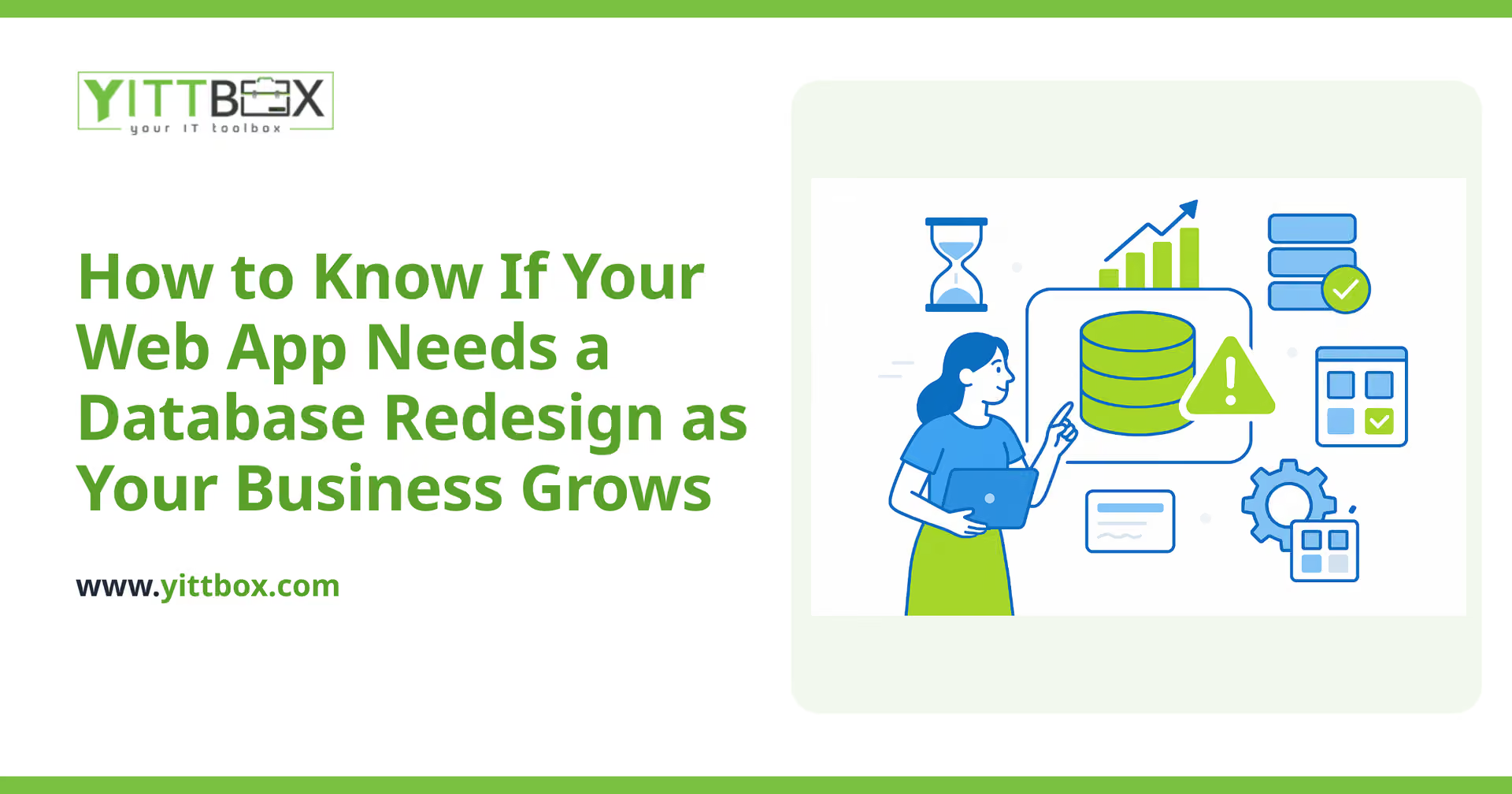
When your business was smaller, your web app probably felt fast, simple, and reliable. But growth changes things. More customers, more orders, more staff logging in at once — and suddenly the app that used to hum along starts to slow down, throw odd errors, or make simple changes feel weirdly hard. Often the real culprit isn't the app you see on screen. It's the database underneath it.
The good news: you don't need to be technical to spot the warning signs. Here are the questions small-business owners actually ask us, with straight answers under each.
How do I know if my database is the problem and not the app itself?
Look for patterns that get worse as you add data or users. A poorly designed database tends to cause slowdowns during busy periods, duplicate or mismatched records, and reports that take forever to load. If your app was quick with 500 records but crawls at 50,000, that's a strong sign the underlying structure wasn't built to scale.
A few common tells:
- The same information is stored in several places — and updating one place doesn't update the others.
- Searches and reports have gotten noticeably slower over the past year.
- Simple feature requests keep getting quoted as "big jobs" because the data is tangled.
- Your team keeps exporting to spreadsheets to do work the app should handle.
What happens if I just ignore it and keep growing?
Usually the small annoyances turn into real costs. Slow pages frustrate customers and staff. Duplicate data leads to bad decisions, because two reports disagree and nobody's sure which is right. Downtime becomes more likely during your busiest, most profitable moments. And every new feature gets more expensive to build, because developers have to work around the mess instead of building on solid ground.
Ignoring it rarely saves money. It just moves the cost to a worse time — often when you can least afford the disruption.
Can't we just add more servers or faster hosting?
Sometimes, briefly. Faster hosting can mask a weak database design for a while, and it's occasionally the right short-term move. But if the structure is the problem, you're paying more every month to paper over an issue that keeps growing. It's a bit like buying a bigger filing cabinet when the real problem is that nothing's filed in a sensible order. At some point, better organization beats more storage.
What does a database redesign actually involve?
At its core, it means rethinking how your information is organized so the app can find, update, and protect it efficiently. A good redesign typically includes:
- Mapping how your business really works today — not how it worked when the app was first built.
- Removing duplication so each piece of information lives in one trustworthy place.
- Structuring the data so searches and reports stay fast as your records grow.
- Migrating your existing data safely, so nothing is lost in the move.
Done well, most of this happens behind the scenes. Your team keeps working while the foundation gets rebuilt, and the change shows up as things simply feeling faster and more reliable.
Will a redesign mean rebuilding my whole app from scratch?
Not usually. In many cases the app on screen can stay largely the same while the database beneath it is reworked and improved. Sometimes a redesign is the right moment to also move an old system off spreadsheets or an ageing Access database onto something more robust — but that's a decision to make together, based on what saves you the most hassle, not a foregone conclusion.
The right scope depends entirely on your situation, which is why we start every project with an honest look before we quote anything.
How much does a database redesign cost?
It depends on how much data you have, how tangled the current structure is, and what you need it to do next. There's no honest one-size-fits-all number, and we won't pretend otherwise. What we can do is look at your specific setup and give you a clear, plain-English breakdown of what's involved and what it would cost. You can ask for an estimate here with no obligation attached.
How do I get started without committing to anything?
Start with a conversation, not a contract. We offer a free, no-pressure review of your situation: we listen to what's slowing you down, take a look at how your data is set up, and tell you honestly whether a redesign is worth it — or whether a smaller fix would do the job.
No pushy sales calls, no jargon, and no obligation to go further. If it makes sense, we'll explain the options in plain English so you can decide at your own pace. When you're ready, tell us a bit about your setup and we'll take it from there.
Comments
Be the first to comment on this post.