
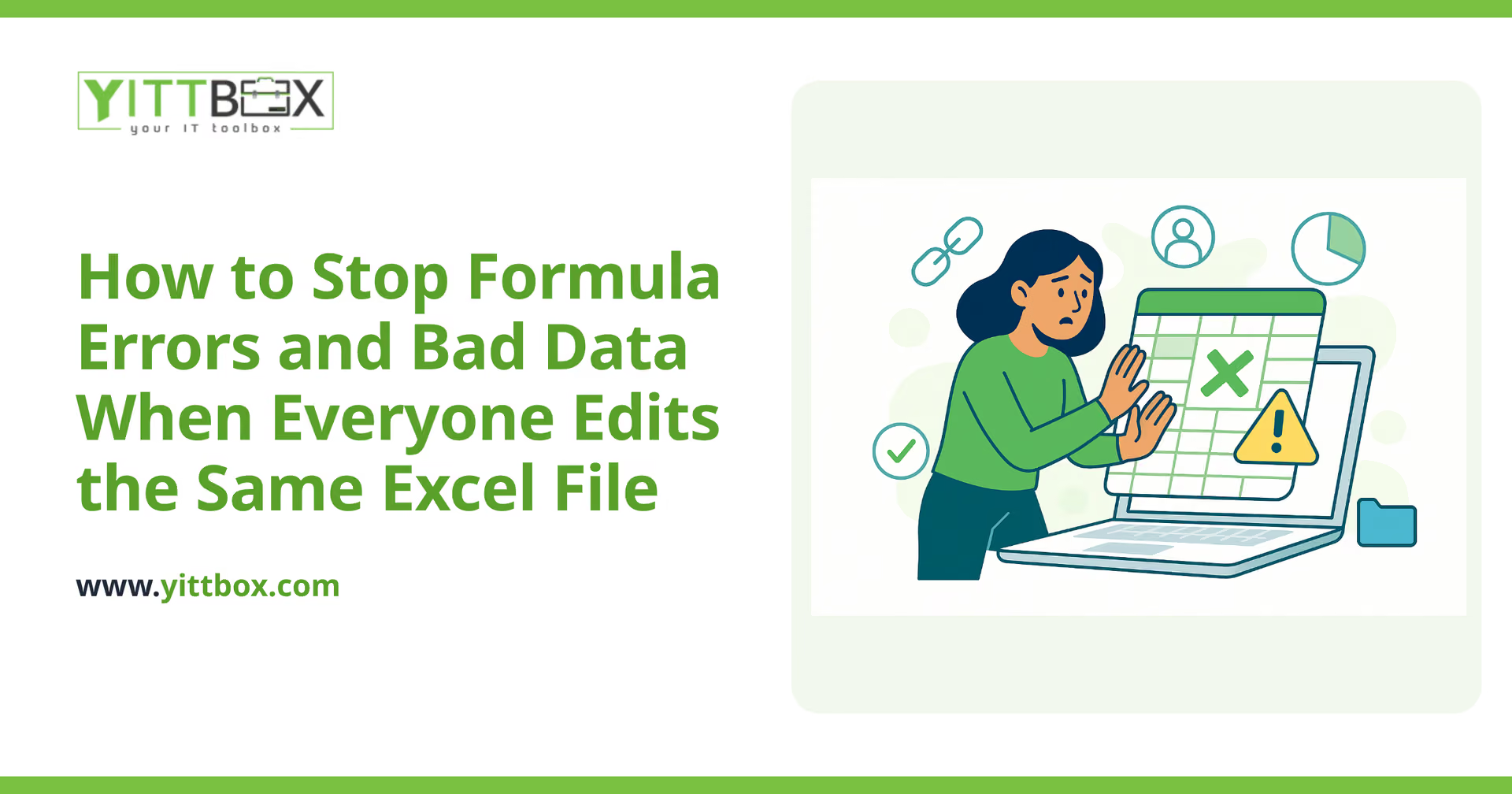
You know the moment. You open the shared spreadsheet on Monday morning, and half the totals are showing #REF!, a column that used to add up now doesn't, and someone has typed "N/A" into a cell that a formula was counting on. Nobody meant to break anything. But when several people edit the same Excel file, small mistakes pile up fast — and by the time you notice, you're not sure which numbers you can trust.
This is one of the most common headaches we hear from small-business owners. The good news: most of it is preventable. Here are straight answers to the questions we get asked most.
Why do formulas break when more than one person edits a spreadsheet?
Formulas break because they depend on things staying exactly where they are. When someone inserts a row, deletes a column, or drags a cell to a new spot, any formula pointing at that location loses its reference — and you get errors like #REF! or #VALUE!. Multiply that across several people who each have their own way of working, and the file slowly falls apart.
Common triggers include:
- Inserting or deleting rows and columns that formulas rely on
- Typing text (like "pending" or "TBD") into cells meant for numbers
- Copy-pasting blocks of data over live formulas
- Renaming or moving a tab that other sheets reference
How can I prevent people from typing the wrong kind of data?
The simplest fix is to limit what each cell will accept. Excel's data validation feature lets you say "this cell only accepts a date," "this one only accepts a number between 1 and 100," or "pick from this dropdown list." That stops a lot of bad data before it ever lands in your file.
A few practical steps:
- Add dropdown lists for anything with fixed options (status, region, category) so people choose instead of type
- Restrict numeric cells to numbers, and date cells to dates
- Lock and protect the cells that contain formulas so they can't be overwritten by accident
- Keep raw data and calculations on separate tabs, so editing one doesn't disturb the other
These guardrails won't catch everything, but they cut down the everyday errors dramatically.
How do I find errors that have already crept in?
Start by making the errors visible instead of hunting for them by eye. Excel can flag problems for you if you set it up to:
- Use conditional formatting to highlight blank cells, negative numbers, or values outside an expected range
- Wrap important formulas in error-checking so a broken cell shows a plain message like "check this" instead of a cryptic code
- Add a small summary tab that totals your key columns — if that total looks wrong, you know to investigate before the numbers go anywhere
The goal is to catch problems the moment they happen, not weeks later when you're building a report and the figures won't reconcile.
How do we stop two people overwriting each other's work?
This is really a version-control problem, and spreadsheets aren't great at it. Even with co-authoring turned on, it's easy for one person's paste to wipe out another person's entry, and there's no reliable record of who changed what and when.
Some habits that help in the short term:
- Keep the file in one shared location — never let people email copies back and forth, or you'll end up with five "final" versions
- Turn on version history so you can roll back a bad change
- Agree on who owns which sections, so people aren't editing the same cells at the same time
These are patches, though. If your team is constantly stepping on each other's work, the spreadsheet has probably outgrown its job.
When is a spreadsheet no longer the right tool?
Spreadsheets are excellent for one person doing calculations. They start to struggle when several people rely on the same file every day, when the data really matters, or when a single mistake causes real problems downstream. If any of these sound familiar, it's a sign you've hit that ceiling:
- You spend real time each week fixing errors instead of using the data
- You're nervous about trusting the numbers in an important report
- Only one person truly understands how the file is wired together
- You've built workarounds on top of workarounds just to keep it running
At that point, a simple custom application to replace the spreadsheet often pays for itself. A proper system enforces the rules automatically, lets several people work at once without collisions, keeps a history of every change, and gives everyone one trustworthy set of numbers. You get the flexibility you liked about the spreadsheet, without the fragility.
What's the easiest way to know whether it's worth changing?
Honestly, you don't have to decide alone. We offer a free, no-pressure review of your current setup. We'll look at how your spreadsheet is used, where the errors are coming from, and whether a few tweaks would fix it — or whether replacing it would genuinely save you time and worry. Sometimes the right answer is to keep the spreadsheet and tighten it up, and we'll tell you that plainly.
There are no pushy sales calls and no jargon. If you'd like a clear, plain-English opinion on what's happening with your file and what your options are, tell us about your spreadsheet or ask for a rough estimate. Either way, you'll come away knowing more than you did — and under no obligation to do anything about it.
Comments
Be the first to comment on this post.