
Introduction:
Even with all the flashy new tech out there, Microsoft Access still plays a big role for tons of small and mid-sized businesses. Why? Because it’s fast, customizable, and doesn’t require a giant IT team to run it. But let’s be real, once your team grows and your data piles up, Access can get a little messy. Sluggish performance, random crashes, and corrupted files become way too common. That’s where AI comes in. It’s not just for robots and fancy analytics anymore, it’s helping us keep our Access databases running clean, smooth, and crash-free.
The Problem: Crashes, Corruptions, and Workflow Gaps
Access is a workhorse, but it’s not bulletproof. We’ve seen teams lose hours (or days!) to database crashes, corrupted files, and performance slowdowns. Most of the time, it’s not some big technical failure, it’s things like oversized files, too many users in one file, or just simple human mistakes. These problems don’t just mess with your data, they throw off your entire workflow.
How AI Predicts Crashes Before They Happen
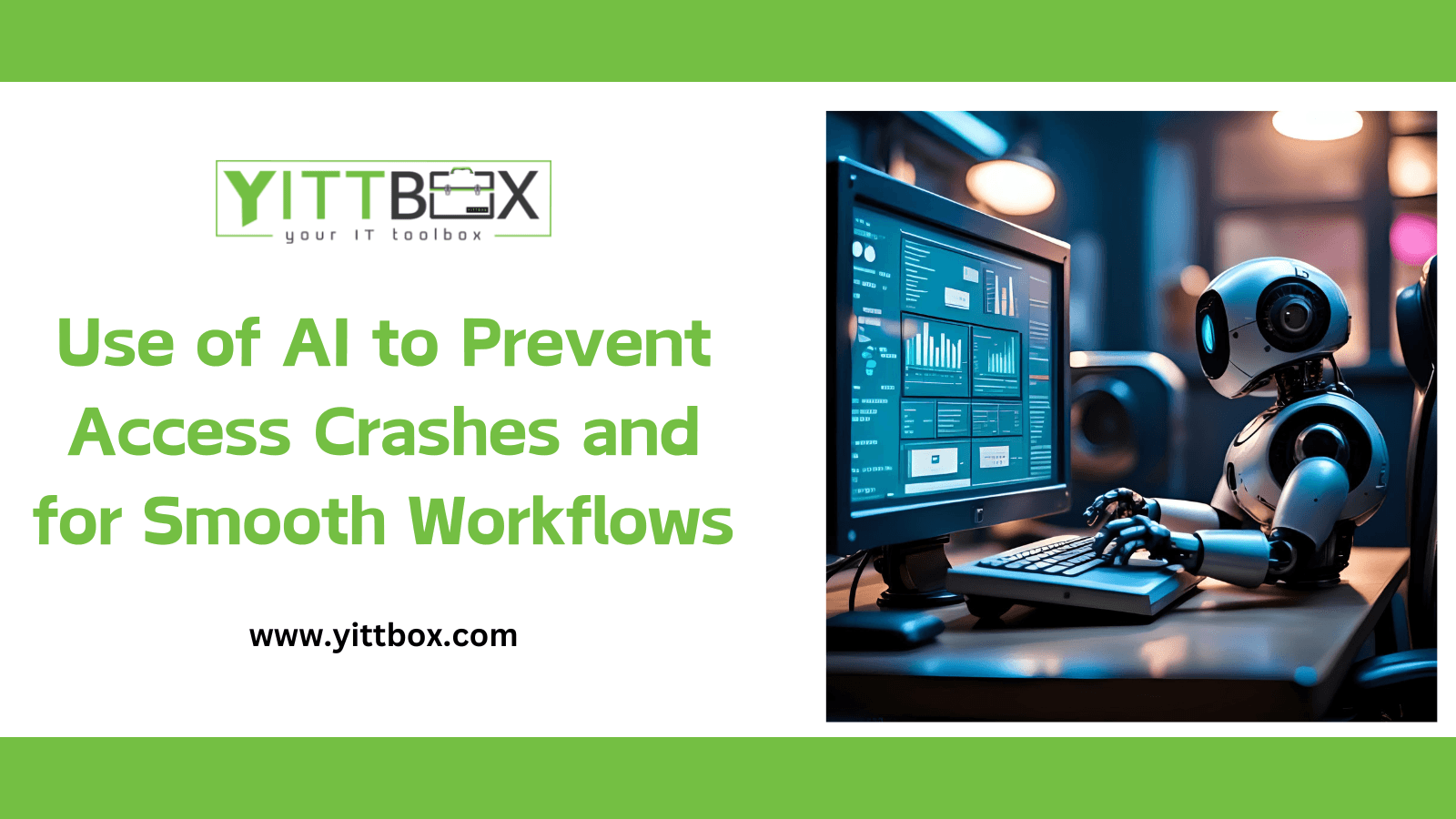
With AI in the mix, we can now monitor your Access setup like a hawk. These smart tools keep tabs on how your database is being used and flag warning signs before they turn into full-blown problems. Is your transaction table getting too big? Is a certain query overloading your system? AI spots it early and gives you a heads-up. Even better, it suggests exactly what to do about it, like splitting your database or streamlining a report.

Automated Maintenance Powered by AI
AI doesn’t stop at spotting issues, it takes care of them automatically. You can set it up to run smart cleanups, compact and repair routines, or even restructure your backend when things get too crowded. No more waiting for a crash to remind you to fix something. Your system stays fast and tidy, without lifting a finger.
Smooth Workflows Start with Smart Data Handling
Your workflows only run as smooth as your data does. That’s why AI-powered Access systems focus on getting the details right:
-
It checks for bad or missing data before it causes a problem.
-
It learns how your team uses the system and automates the boring stuff.
-
It flags weird patterns or slowdowns so you can fix them fast.
With AI keeping an eye on the back end, your team can focus on getting things done instead of fighting with tech.
A typical case: the table that quietly outgrew the file
This is the most common shape the problem takes. A tracking table — deliveries, transactions, job records — grows steadily for a couple of years while nobody is watching it, because nothing about it looks urgent until the day it breaks. Then the crashes start, usually weekly, usually at the busiest point of the week. Monitoring catches this early because the warning signs are measurable well before the failure: the file size climbing, particular queries taking longer each month, memory spiking on the same operation. The fix is normally unglamorous — split the front end from the back end, index what is being searched, archive what is no longer live — and the crashes stop.
Conclusion: Future-Proofing Your Access Setup
If you’re still patching things up manually and hoping nothing breaks, it’s time for a better way. AI gives you the power to predict problems, fix them automatically, and keep your workflows moving. With smarter tools watching your back, your Access setup becomes something you can rely on, not worry about. The future of Access isn’t just functional, it’s intelligent.
Comments
Be the first to comment on this post.